Message: Return type of CI_Session_files_driver::open($save_path, $name) should either be compatible with SessionHandlerInterface::open(string $path, string $name): bool, or the #[\ReturnTypeWillChange] attribute should be used to temporarily suppress the notice
Message: Return type of CI_Session_files_driver::close() should either be compatible with SessionHandlerInterface::close(): bool, or the #[\ReturnTypeWillChange] attribute should be used to temporarily suppress the notice
Message: Return type of CI_Session_files_driver::read($session_id) should either be compatible with SessionHandlerInterface::read(string $id): string|false, or the #[\ReturnTypeWillChange] attribute should be used to temporarily suppress the notice
Message: Return type of CI_Session_files_driver::write($session_id, $session_data) should either be compatible with SessionHandlerInterface::write(string $id, string $data): bool, or the #[\ReturnTypeWillChange] attribute should be used to temporarily suppress the notice
Message: Return type of CI_Session_files_driver::destroy($session_id) should either be compatible with SessionHandlerInterface::destroy(string $id): bool, or the #[\ReturnTypeWillChange] attribute should be used to temporarily suppress the notice
Message: Return type of CI_Session_files_driver::gc($maxlifetime) should either be compatible with SessionHandlerInterface::gc(int $max_lifetime): int|false, or the #[\ReturnTypeWillChange] attribute should be used to temporarily suppress the notice
Robotics Hardware Evolution Pushing Boundaries of Automation
Reporter:
ikbal ikbal|
Editor:
ikbal ikbal|
Sabtu 08-11-2025,13:34 WIB
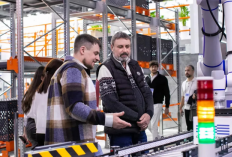
Attendees observe a robotic automation system at TRST Expo. Demonstration of advanced robotics for logistics and warehouse automation. A modern industrial exhibition featuring smart technology and innovation.-Trans Russia-Unsplash.com
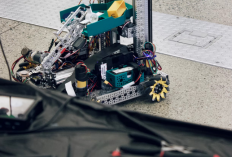
In a quiet industrial lab in Tokyo, a robotic arm hums with precision, its joints moving smoother than any human wrist. It’s not just a mechanical device; it’s the latest chapter in a decades-long evolution of robotics hardware that is redefining automation across the globe. From factories to farms, robots are no longer tools—they are collaborators.
The story of automation has always been tied to human ambition. Each generation of engineers pushes the limits of what machines can do, and today’s breakthroughs in robotics hardware prove that ambition is only accelerating. Lighter materials, smarter sensors, and modular designs are transforming robots from fixed assets into adaptive systems capable of learning and evolving with their environments.
The next wave of hardware innovation isn’t happening behind closed doors—it’s unfolding in public view. Global startups are introducing machines capable of real-time decision-making, powered by AI-driven processors. These aren’t theoretical prototypes; they are already being tested in logistics, construction, and even personal assistance industries.
Automation in 2025 is less about replacing human labor and more about amplifying it. Hardware is no longer designed just for efficiency, but for intuition. The latest robotic systems feature hybrid architectures that combine tactile feedback with adaptive AI cores. This allows robots to understand not just movement, but intention—a leap that blurs the line between programming and perception.
Compact servo motors increase efficiency and reduce energy waste.
Edge computing enables robots to make faster, localized decisions.
Collaborative systems reduce errors in human-machine interactions.
These developments are paving the way for an economy where hardware is not static but evolutionary—constantly learning, adapting, and upgrading itself as environments and demands shift. The revolution is no longer coming; it’s already here.
New Robotics Technology Update Changing Industrial Workflow
Factories once ran on repetitive cycles and fixed schedules. Now, flexibility is the defining feature of modern manufacturing. A new generation of robotics hardware has given industries the power to reconfigure workflows dynamically. Machines can now collaborate in real time, detect inefficiencies, and optimize production without human intervention.
One example is the deployment of autonomous robotic inspectors in assembly lines. Using high-precision sensors and deep learning models, these machines can identify defects invisible to the human eye. The data they gather doesn’t just ensure quality—it refines the entire process, teaching the system how to prevent similar issues in future cycles.
Factories integrate AI-assisted arms for microassembly tasks.
Warehouses deploy robotic swarms for adaptive logistics.
Energy sectors use automated drones for maintenance checks.
Industries that once feared disruption are now embracing it. The cost of robotics hardware has dropped, while reliability has risen exponentially. What was once luxury technology for tech giants is now accessible to mid-scale industries and research institutions worldwide.
Game Engine Upgrades That Will Dominate 2026
Outside the world of robotics, another silent hardware revolution is taking place—inside game studios. As 2026 approaches, game engines are evolving at an unprecedented pace. Developers are no longer just coding physics and lighting; they are crafting fully interactive universes where players and AI coexist seamlessly.
The most anticipated upgrades revolve around hardware acceleration and procedural generation. Engines now harness real-time ray tracing, neural texture synthesis, and volumetric simulation—technologies once reserved for Hollywood-level rendering. These advances are redefining immersion, letting developers build worlds with cinematic realism while maintaining performance across devices.
Ray tracing cores enable ultra-detailed environments with dynamic lighting.
AI-assisted rendering predicts and preloads visual assets in milliseconds.
Physics-based animation creates natural human and environmental motion.
As players demand more realism, the hardware supporting these engines is following suit. GPU manufacturers are collaborating with engine developers to ensure seamless integration of neural rendering and cloud synchronization. The result: games that feel alive, responsive, and visually groundbreaking.
Game Engine Secrets Revealed: How Developers Build Worlds
Every great virtual world starts with a question: what makes it feel real? The secret lies in the harmony between software and hardware. Developers rely on advanced engines not only to render landscapes but to simulate emotion, consequence, and scale. It’s an art form built on algorithms.
In recent interviews, developers from top studios shared insights into their creative process. They described how storytelling and physics now share the same codebase—where emotional pacing is tied to frame timing and player movement. A delayed frame isn’t just a glitch; it’s a moment that can alter the rhythm of a narrative.
Behind the scenes, these worlds are built through modular design. Game engines are now platforms for experimentation, where developers can merge robotics algorithms, physics simulation, and AI dialogue systems. The same computational principles that guide an autonomous robot’s movement can also guide a digital character’s decision-making. The boundaries between robotics and gaming are thinning fast.
Developers employ procedural tools to expand worlds infinitely.
AI agents learn player behavior for dynamic storytelling.